
What Is a Trap in Plumbing? A Laguna Hills, CA Homeowner Guide
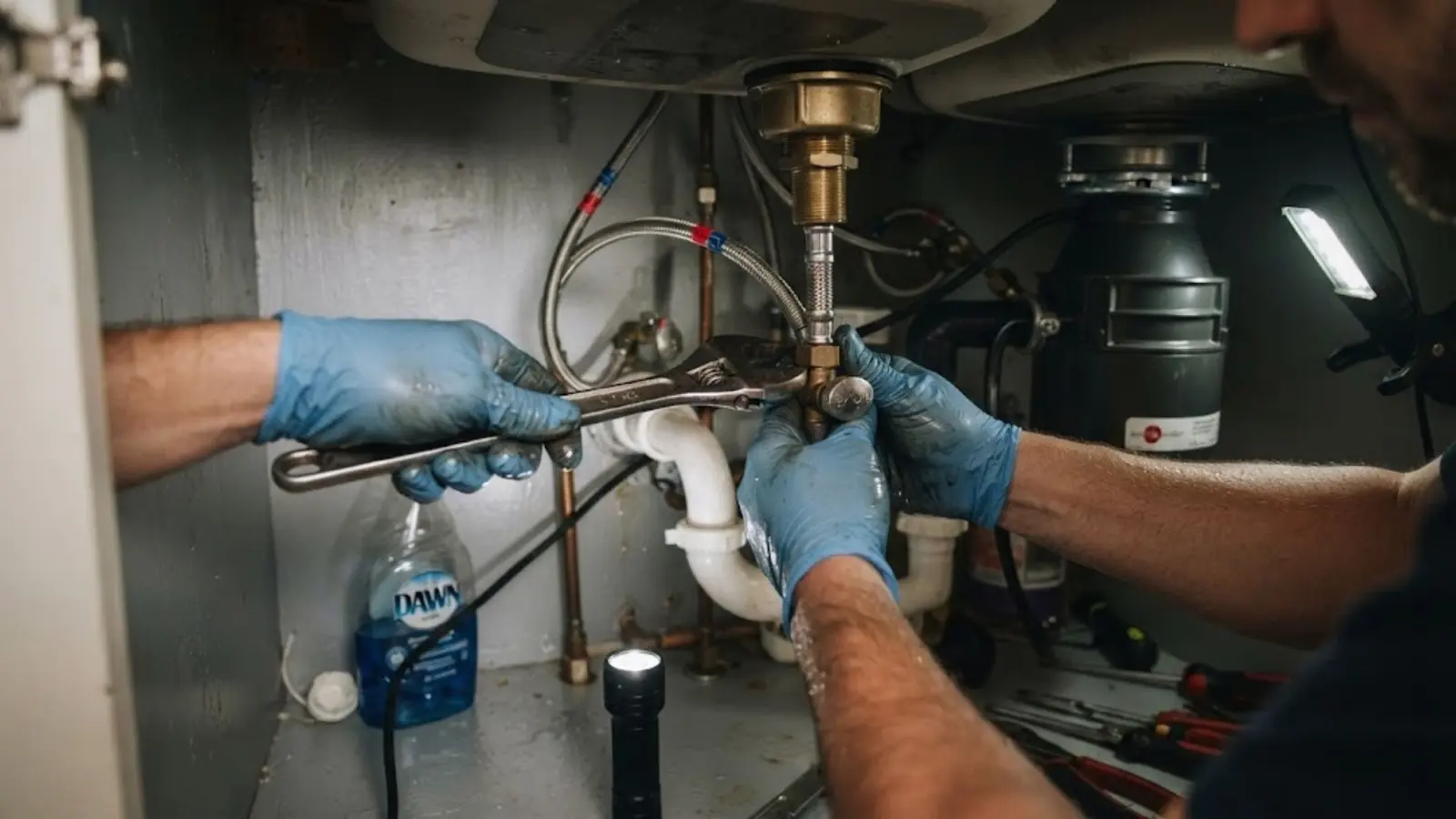
The curved pipe under your sink is a trap, and it does two jobs at once. It holds a seal of water that blocks sewer gas, and it catches heavy items before they reach the main drain.
A plumbing trap is a bend in the drain pipe that stays full of water. The water in the bend forms a seal. Wastewater flows through it freely, but air and gas from the sewer cannot push back through the standing water.
Every fixture that drains into the house system needs a trap. Sinks, tubs, showers, washing machines and floor drains all have one, and toilets have a built in trap in the porcelain.
The trap types you will see
| Type | Shape | Where it is used |
|---|---|---|
| P-trap | A U bend followed by a pipe to the wall | Sinks and lavatories, the standard in modern homes. |
| Tub trap | A P trap or a drum, hidden below the tub | Bathtubs and showers. |
| Floor drain trap | A deep seal below a grate | Laundry rooms, garages and basements. |
| Integral toilet trap | A built in S shaped channel in the bowl | Every toilet. |
| S-trap | A bend that exits straight down | Older work, not allowed in new installs because it can siphon dry. |
If you find an S shaped trap or a drum trap in an older home, it may be a candidate for update. A plumber can tell whether it is working as intended.
Why traps smell or gurgle
A trap that empties loses its seal, and sewer gas can enter the room. A sewer smell near a sink or floor drain usually means one of a few causes.
- The trap is dry from a drain that is rarely used, such as a guest bath or a garage floor drain.
- The vent is blocked, so draining water siphons the seal out.
- The trap is cracked or has a loose connection that lets gas and water escape.
- A clog or buildup in the trap holds bacteria and odor.
- The wall drain behind the trap is partially blocked.
Pouring a quart of water into a rarely used drain, then a spoonful of cooking oil on top to slow evaporation, restores the seal. If the smell returns, the cause is deeper.
Cleaning a P-trap under a sink
Prepare
Put a bucket under the trap and clear the cabinet.
Loosen
Unscrew the slip nuts by hand or with pliers and lower the trap.
Clean
Empty and rinse the trap, and check the pipe ends for buildup.
Reconnect
Seat the washers, tighten the nuts snugly and run water to test for leaks.
Do not overtighten plastic nuts, which can crack. If a connection keeps weeping, replace the washers or the trap. See faucet and sink repair for more.
Smell coming from a drain?Call and we will track down the cause.
Call (949) 325-3122When the trap is not the problem
A trap that keeps clogging may be a sign of a line problem beyond it. If several fixtures gurgle, the main line or a vent may be at fault, and drain cleaning looks at the whole run.
How far a trap can sit from its vent
The plumbing code limits the distance between a trap and its vent, and the limit depends on the pipe size. If the trap arm runs too far, draining water can pull the seal out of the trap, which causes gurgling and odors. This is a common reason for a bathroom that smells after a remodel.
Trap care that avoids calls
Run water in every fixture at least once a week, including guest baths and utility sinks. Pour a cup of water into floor drains in the garage and laundry room each month. A trap with a full seal will block gas for as long as the water stays in it.
If a trap primer is installed on a floor drain, check that it still feeds water. A primer that has failed will leave the trap dry, and the drain will smell.
Laguna Hills notes: older homes and code
Laguna Hills grew from Moulton Ranch land that was subdivided in the early 1960s, and the city incorporated on December 20, 1991. Homes from the early decades can still have drain details that predate the current plumbing code, such as drum traps or old tub traps.
New and replaced traps follow the California Plumbing Code, which is based on the Uniform Plumbing Code (UPC). The Building & Safety Division at (949) 707-2600 applies the 2025 California Building Standards Code to applications filed on or after January 1, 2026.
Sources: City of Laguna Hills history and Building & Safety Division information.
Do I need a plumber for a trap?
Cleaning or replacing a sink trap is a modest job for a careful homeowner. A trap that is buried in a slab or below a tub, or one with a recurring sewer smell, deserves a professional look.
We serve Laguna Niguel and Laguna Woods as well, and the same trap rules apply across all three.
Local questions, answered
Why does my bathroom smell like sewage when I do not use it often?
The trap may have dried out. Run water for a minute to refill it. If the smell comes back quickly, the vent or the trap may have a fault.
Can a trap freeze or break?
A trap can crack if it is struck or over tightened. Freezing is uncommon in Laguna Hills, so cracks from age or impact are more likely.
What did Laguna Hills homes from the early years use for traps?
Some older homes have drum traps or older tub traps. A plumber can check them, and the current code applies to anything replaced.
Is a trap the same as a clog?
No. A trap is a normal part of the drain. A clog is a blockage, and it often forms at or just past the trap.
Smell coming from a drain?
Call and we will track down the cause.